
The Heinz Endowments aims to build an exemplary, sustainable region where everyone prospers and belongs. Endowments President and podcast host Chris DeCardy welcomes thought leaders in the arts & culture, environmental, workforce, veterans and civic participation fields who share their experiences at the intersection of public service, philanthropy and nonprofit communities with honesty, humanity and hope.
Episodes
Sep 22, 2021
Sep 22, 2021
43 min
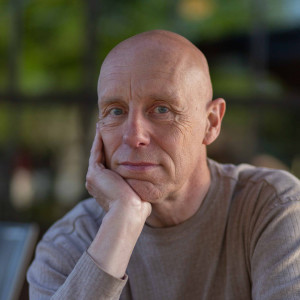
Energy industry researcher and “The State of My State” author Sean O’Leary zeroes in on the role of coal, natural gas and petrochemicals in the economies of Appalachia.
He does it with with a deep respect for the region where he grew up, and an understanding that with the beauty and grandeur of that region also comes unfulfilled promises of hydraulic fracturing-related prosperity.
Sean was born and raised in West Virginia, and is a senior researcher and writer with the Ohio River Valley Institute. The Institute was founded in 2020 with an aim of providing sound research that will help promote a more sustainable, equitable, democratic and prosperous Appalachia.
His book, newspaper column and blog—all titled “The State of My State”—have been widely shared and cited, and have captured the attention of the U.S. Department of Energy, where Sean was asked to present earlier this year.
Sean shares with host Grant Oliphant the painful battle regarding “wish and hope” that he has heard families in Appalachia express. He says that while they often “wish their kids and grandchildren would stay when they are grown and have families of their own, the lack of opportunity makes them also hope they don’t.”
Hear about eye-opening data and the post-fossil fuel economic plan playing out now in a community in Washington state that is giving hope that a similar blueprint for Appalachia is possible—all on this new episode of “We Can Be.”
“We Can Be” is hosted by Heinz Endowments President Grant Oliphant, and produced by the Endowments, Josh Franzos and Tim Murray. Theme music by Josh Slifkin. Guest inquiries can be made to Scott Roller at sroller@heinz.org. Guest image: Steve Stolee.
Sep 15, 2021
Sep 15, 2021
34 min
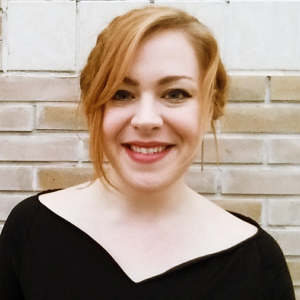
Kristina Marusic is an investigative reporter covering environmental health & justice issues for Environmental Health News, a nonprofit and nonpartisan organization dedicated to driving science into public discussion and policy.
In early 2021, Environmental Health News published Kristina’s “Fractured: The body burden of living near fracking,” a four-part series that revealed the health impacts of shale hydraulic fracturing—or fracking—on families living near fracking sites. Research for the series, conducted in the summer of 2019, included a nine-week collection of air, water, and urine samples from five southwestern Pennsylvania households, all including at least one child.
Kristina’s “Fractured” series garnered national attention, and has become a key piece of evidence for lawmakers urging action on environmental health issues.
Prior to joining the Environmental Health News team in 2018, Kristina gained national acclaim for her work as a staff writer for MTV news, and has had bylines on stories in The Washington Post, CNN, Slate, Vice, Women's Health, and The Advocate.
Kristina’s journalism is, as she tells host Grant Oliphant, “a way of reporting that helps society learn how to fix itself. It's not advocacy or fluff or good news, it's forward-looking, serious and critical.”
Of her reporting on environmental topics, including climate change, the health risks of fracking, and “super pollution” air events, Kristina says: “I believe that true, well-told stories have the power to change the world for good.”
Listen to how she is doing just that on this episode of “We Can Be.”
“We Can Be” is hosted by Heinz Endowments President Grant Oliphant, and produced by the Endowments, Josh Franzos and Tim Murray. Theme music by Josh Slifkin. Guest inquiries can be made to Scott Roller at sroller@heinz.org.
Sep 8, 2021
Sep 8, 2021
36 min
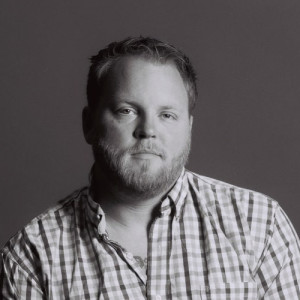
Thomas Brennan is Founder and Exec. Director of The War Horse, a nonprofit newsroom that has gained international respect for reporting on the often-unspoken human impacts of military service.
A former Marine Corps sergeant who served as an infantryman in Iraq and Afghanistan, Thomas joins host Grant Oliphant for a timely conversation about his journey from active duty service in Afghanistan to being honored with a Robert F. Kennedy Human Rights Award for his resolute reporting on sexual assault in the military.
Thomas first gained widespread journalistic acclaim for a series of self-penned pieces in The New York Times that chronicled what he has called the “mental health and moral injury” – including what was eventually diagnosed as a traumatic brain injury - caused by an attack in Afghanistan’s Helmand Province when he was 24.
Thomas went on to found The War Horse in 2016, and the following year co-authored the well-received Shooting Ghosts—A U.S. Marine, a Combat Photographer, and Their Journey Back from War with Finbarr O'Reilly.
“When reading my reporting, I don’t want people to think that it’s ‘poor me,’ or ‘woe is me,’ because veterans don’t want pity,” Thomas says. “We want to have a conversation.”
Aiming to bridge the military – civilian divide through well-researched stories that hold truth to power, Thomas and The War Horse team have done just that, publishing investigative pieces that have served as catalysts for significant national policy change.
Thomas says: “We aim to strengthen our democracy by improving our country’s understanding of the true cost of military service.”
“We Can Be” is hosted by Heinz Endowments President Grant Oliphant, and produced by the Endowments, Josh Franzos and Tim Murray. Theme music by Josh Slifkin. Guest inquiries can be made to Scott Roller at sroller@heinz.org. Guest image credit: The Carey Institute for Global Good.
Sep 1, 2021
Sep 1, 2021
29 min
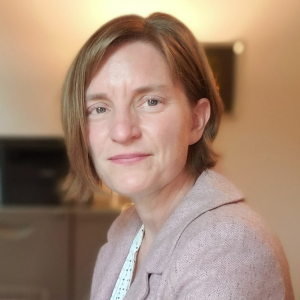
Nell Edgington, author of “Reinventing Social Change: Embrace Abundance to Create a Healthier and more Equitable World,” has traveled coast to coast in her quest to guide social-change warriors in realizing their full power and capability.
Social change movements have been part of our country’s DNA for hundreds of years, encompassing the abolitionist movement of the 1800s, the suffragist movement that culminated in women gaining the right to vote in 1920, and the civil rights movement that gained widespread support in the 1960s and whose work continues to this day.
Whether you are a social change activist, involved in the nonprofit or philanthropic world, or just have an interest in what it takes for the arc of justice to bend, Nell’s conversation with host Grant Oliphant will inspire and re-energize.
Born and raised in Minnesota, with a professional background that includes time at PBS national headquarters in Arlington, Virginia, and at the Central Texas Food Bank in Austin, Nell has been president of the Austin-based management consultant group Social Velocity since its founding in 2008. “Reinventing Social Change” was published in 2021.
A fan of Janelle Monáe and Robert Frost, Nell brings a sense of joy and optimism to her work, which she encourages in others:
“We are infinitely more powerful – in creating social change, or really in doing anything – when we approach it from a place of joy.”
“We Can Be” is hosted by Heinz Endowments President Grant Oliphant, and produced by the Endowments, Josh Franzos and Tim Murray. Theme music by Josh Slifkin. Guest inquiries can be made to Scott Roller at sroller@heinz.org. Image: Justin Edgington
Aug 25, 2021
Aug 25, 2021
32 min
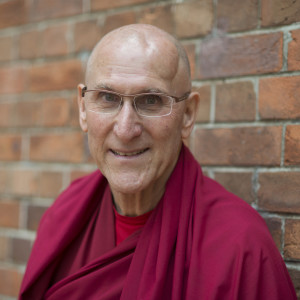
Dr. Barry Kerzin is foremost a kind, giving, smart and all-around inspirational human being.
And if that were all he was, it would be more than enough.
But Barry is also a Buddhist monk, a personal physician to the Dalai Lama, and the founder of both the Human Values Institute in Japan and the United States-based Altruism in Medicine Institute, which teaches resilience to health care workers through training in compassion and mindfulness.
He shares his fascinating and moving journey with “We Can Be” host Grant Oliphant, including how the Dalai Lama told him that his path would be “50-50—one half medicine and the other half spreading love and compassion.” Barry listened and has followed that auspicious path for more than three decades.
“If we can learn to focus our mind even a little bit, we will be more successful in training our minds to be more compassionate—and therefore happier,” Barry says of his work teaching mindfulness to nurses, doctors and police forces in an effort to help them cope with the stress and trauma of their professions.
He has been profiled in media outlets around the world, including PBS and CNN, and shared his wisdom with audiences throughout Europe and North America, as well as in Hong Kong, Taiwan, Korea, Russia, and Mongolia, to name but a few.
Barry, whose brain has been studied by both Princeton University and the University of Wisconsin as part of their quests to understand the effects of long-term meditation, believes that “socially engaged Buddhism” has enormous potential for all of us.
“When you’re being compassionate, “he says, “you feel good.”
“We Can Be” is hosted by Heinz Endowments President Grant Oliphant, and produced by the Endowments, Josh Franzos and Tim Murray. Theme music by Josh Slifkin. Guest inquiries can be made to Scott Roller at sroller@heinz.org.
Aug 18, 2021
Aug 18, 2021
32 min
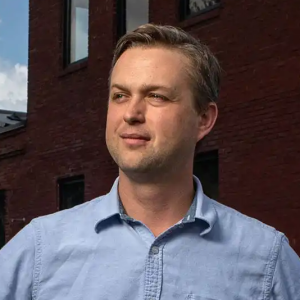
Coalfield Development CEO Brandon Dennison & his team are rebuilding the Appalachian economy one job at a time, with gumption, grit & grace as their guide.
The wide valleys, imposing mountains and steep ridges that make up the topography of Appalachia wind across all or parts of 12 states, stretching from New York to portions of Mississippi and Alabama.
In the middle this impressive terrain is Huntington, West Virginia, the home of both Brandon and Coalfield Development, which he co-founded in 2010 with his high school best friend.
Brandon and his team bridge the divide between those dedicated to a declining fossil fuel economy and those who believe in the family-sustaining jobs that a renewable energy economy provides.
That’s just one of the reasons he was honored with a 2019 Heinz Award and has been interviewed by the BBC, CNBC and the New York Times.
He has led Coalfield Development in the revitalization of 200,000 square feet of formerly dilapidated property, helped create 300 new jobs, and brought $20 million in new regional investment to Appalachian communities.
As Brandon tells host Grant Oliphant: “Change is hard,” and the coal industry “uses fear with incredible precision.”
He and the Coalfield Development family counter that fear with fact-based data, comprehensive job and life-skills programs, and—most of all—heartfelt dedication to the long-term health and economic well-being of the Appalachian communities they call home.
“Bridging divides is about human interaction,” Brandon says, “and when that happens, barriers go down.”
“We Can Be” is hosted by Heinz Endowments President Grant Oliphant, and produced by the Endowments, Josh Franzos and Tim Murray. Theme music by Josh Slifkin. Guest inquiries can be made to Scott Roller at sroller@heinz.org.
Aug 11, 2021
Aug 11, 2021
37 min
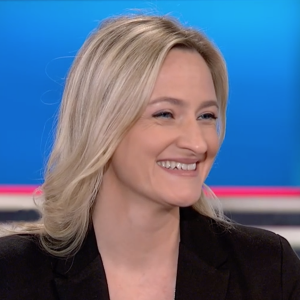
GivingTuesday co-founder Asha Curran has been key in producing 20 billion social media impressions & raising nearly $2.5 billion dollars to help others in a single year.
Digital generosity platform GivingTuesday was created in 2012 to be, in her words, “an antidote to Black Friday and Cyber Monday, the two days right after Thanksgiving that shamelessly celebrate mass consumption.”
Instead, Asha and co-founder Henry Timms envisioned a simple, open-source, customizable digital giving campaign that could help thousands of nonprofits raise funds in a unified day of giving.
Now, nearly a decade on, GivingTuesday (originally launched as part of New York City’s 92nd Street Y cultural center) has become a worldwide success, proving that Asha’s concept of what she calls “radical generosity” is more than simply a possibility—it is reality.
Born in India and raised on the Lower East Side of New York City with a uniquely non-linear life path, Asha brings a world of experience to her role as the CEO of GivingTuesday.
As Asha tells host Grant Oliphant: “I focus on things that I find interesting and meaningful, and I immerse myself deeply in them.”
Hear about her meaningful, ground-breaking work in digital generosity on this episode of “We Can Be.”
“We Can Be” is hosted by Heinz Endowments President Grant Oliphant, and produced by the Endowments, Josh Franzos and Tim Murray. Theme music by Josh Slifkin. Guest inquiries can be made to Scott Roller at sroller@heinz.org.
Aug 4, 2021
Aug 4, 2021
34 min
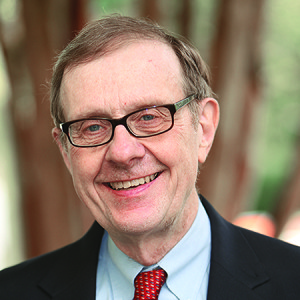
William H. Frey (“Diversity Explosion: How New Racial Demographics are Remaking America”) joins host Grant Oliphant in diving into new census data - and shares what it could mean for the future of our nation.
The internationally renowned demographer and senior fellow in the Metropolitan Policy Program at the Brookings Institute is acutely skilled at taking complicated data and helping us understand what it says about who we are and where we are going as a country.
William is also is a research professor with the University of Michigan’s Institute for Social Research and Population Studies Center, has authored more than 200 publications, and has been a consultant to the U.S. Census Bureau. His work has been covered in dozens of media outlets, including The Economist, Forbes, The New Yorker, NPR’s “All Things Considered,” NBC, CBS, ABC, and The Washington Post.
His current research agenda involves examining 2020 U.S. census practices and results, tracking voting trends associated with the 2020 presidential primary and general election, and monitoring demographic aspects of the ongoing COVID-19 pandemic.
“Black and brown citizens, and an increasingly progressive young population will dominate spending power, population increases, and, eventually, the care of our older citizens,” William says of the latest census data.
Having this data is just the first step, however. “It will take political leadership—on both national and regional levels—to help educate us as to why this is so important, and why this is good for us.”
We Can Be” is hosted by Heinz Endowments President Grant Oliphant, and produced by the Endowments, Josh Franzos and Tim Murray. Theme music by Josh Slifkin. Guest inquiries can be made to Scott Roller at sroller@heinz.org.
Apr 28, 2021
Apr 28, 2021
32 min
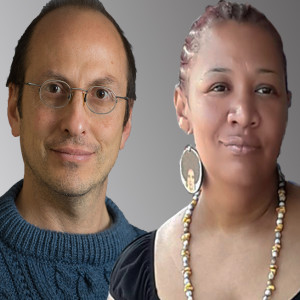
Carnegie Mellon University’s CREATE Lab leader Illah Nourbakhsh, & Raqueeb Bey, exec. dir. of Black Urban Gardeners & Farmers of Pittsburgh join host & Endowments Pres. Grant Oliphant as they dive into the fascinating backstory of the new & innovative Center for Shared Prosperity.
One of the great anomalies of modern American society is the disconnect between the intellectual capital, innovation, and wealth creation associated with its leading research universities and the persistent challenges and inequality confronting the communities in which those centers of innovation reside.
There is a better way – one in which universities focus their research and problem-solving expertise on those challenges that surrounding communities identify as most urgent. It’s a way that includes deep and long-term partnerships between community representatives, universities and philanthropy.
Funded by The Heinz Endowments with its largest-ever single grant and guided by a committee of community leaders, the newly launched Center for Shared Prosperity at Carnegie Mellon University is creating a template for that better way.
Illah is the K&L Gates Professor of Ethics and Computational Technologies at Carnegie Mellon’s Robotics Institute, the author of “Robot Futures,” and co-author of “AI and Humanity,” both from MIT Press.
In addition to heading Black Urban Gardeners and Farmers of Pittsburgh, Raqueeb also leads Mama Africa’s Green Scouts, a grassroots organization that works with black youth in underserved communities to encourage awareness of green education, environmental sustainability and social justice.
Illah and Raqueeb share what they believe the Center for Shared Prosperity could mean for both the university and surrounding communities, and how other cities across the nation with major research institutions may use the initiative as a guide for systemic change.
“I see this as the opportunity for all of us to come together in a genuine, long-term way to make permanent change in the structure of the system,” says Raqueeb.
Illah agrees: “I believe that we can be pioneers for justice together.”
“We Can Be” is hosted by Heinz Endowments President Grant Oliphant, and produced by the Endowments, Josh Franzos and Tim Murray. Theme music by Josh Slifkin; incidental music by Giuseppe Capolupa. Guest inquiries can be made to Scott Roller at sroller@heinz.org.
Sep 23, 2020
Sep 23, 2020
32 min
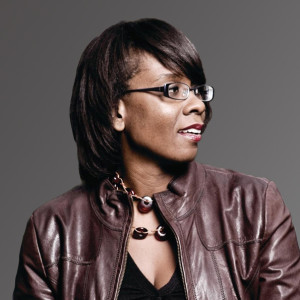
Toni Griffin, head of the Harvard Graduate School of Design’s Just City Lab and co-editor of “Patterned Justice,” joins host Grant Oliphant for this episode of “We Can Be.”
Our country has perpetuated structural race and class inequities for more than two centuries. But what if we could design cities – their structures, infrastructures and public spaces – in ways that lessen that inequity and foster a more just community?
Toni Griffin has been studying, teaching and putting into action this concept of “just cities” for the past decade, most notably with the Just City Lab, a research platform for developing community-informed and values-based planning methodologies and tools.
Toni is the co-editor of the 2020 book “Patterned Justice,” a fascinating look at the process communities can take in identifying the unique values, assets and opportunities that they can enlist in making their neighborhoods more just. Through her New York City-based UrbanAC consulting firm, she has led trans-disciplinary planning and urban design projects for clients in cities with long histories of spatial and social injustice.
In 2016, President Barack Obama appointed Toni to the United States Commission of Fine Arts, and she is a trusted advisor of mayors and civic leaders in several cities, including Washington, D.C., Memphis, St. Louis and Pittsburgh.
Toni shares how she came to recognize patterns of injustice common in cities around the United States; what Pittsburgh’s porches, stairs and playgrounds can tell us about inequity; the importance of a common “patterned language”; and why we must consider how spaces affect our mind, body and soul when creating equity-centered city and neighborhood design.
“Thoughtful, community-informed design,” Toni says, “can have a role in dismantling – and facilitating — solutions to the physical, social, economic or environmental systems and structures that are at play in making our cities unjust.”
“We Can Be” is taking a brief break, and will return in the coming weeks with new episodes. Our podcast is hosted by Heinz Endowments President Grant Oliphant, and produced by the Endowments, Josh Franzos and Tim Murray. Theme music by Josh Slifkin. Guest inquiries can be made to Scott Roller at sroller@heinz.org.